

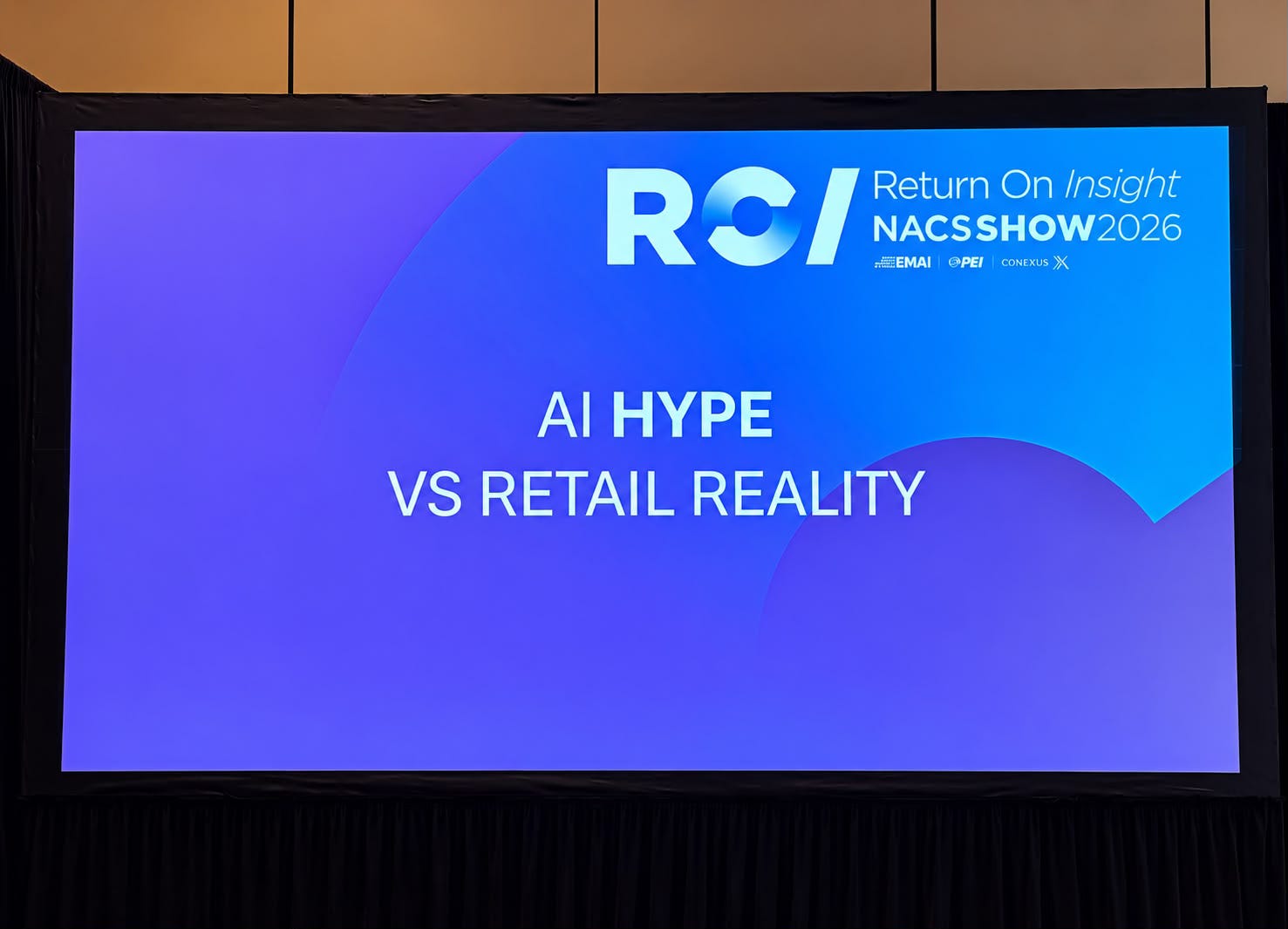
I sat in on a session at NACS in Las Vegas today called AI Hype vs. Retail Reality, led by Brian Ray, Managing Director at Accenture.
The room was full. Most people in it run convenience stores and retail fuel sites. Everyone has heard the AI pitch by now. I think most of them came for the same reason I did. To find out what is real.
The idea that stuck with me was a simple distinction.
Human in the lead. Human in the loop.
Two phrases that sound almost the same. They describe two very different jobs.
I walked out of that room thinking about the fuel operations I spend time in. The dispatchers. The billing teams. The drivers. Because this distinction matters even more on the distribution side than it does at the store.
What the two phrases actually mean
“Human in the loop” is the one you hear most. A person reviews what the AI produced before it moves forward. A driver checks the gallons read off a BOL. A biller looks at an unexpected supplier charge.
“Human in the lead” comes before that.
It means your team sets the rules first. Which suppliers are approved. How each customer is priced. What makes a delivery ready to bill. Which exceptions need a manager’s signoff.
Think about training a new hire. You do not hand them a stack of tickets on day one and say figure it out. You explain how the business works first.
AI needs the same thing. Without it, your people spend the day correcting work that was prepared on the wrong assumptions.
AI can read the paperwork. Your team has to decide what the paperwork means.
Here is how that plays out in four places I see every week in fuel distribution.
The driver photographs a BOL
The driver loads and needs to record the terminal, supplier, product, gallons, and BOL number.
AI reads the photo and fills in the load record. The driver glances at it and confirms.
Now the real world. The BOL is a faded carbon copy. The photo was taken at an angle in bad light. The BOL says “ULSD #2” and the order says “Clear Diesel.”
A useful app flags the one field it is not sure about and asks the driver to check it. It keeps the original photo attached so nobody has to remember what the paper said.
That saves typing without turning a guess into an inventory record.
Dispatch weighs two terminals
Terminal A is three cents cheaper. On an 8,000-gallon load, that is $240.
But it is farther out. The extra miles add freight. The driver is close to his hours. The customer’s gate closes at 3pm.
AI can pull the inputs together: rack prices, distance, loading time, driver hours, compartments, expected margin.
Then the dispatcher says, “Terminal A has been backed up every morning this week.”
That is not an error. That is information. The system should make it easy for her to override the recommendation and record why. That note is worth more next week than the recommendation was today.
A vendor invoice changes the margin
Say you broker 400 gallons of dyed diesel.
Estimated vendor price: $4.10. Customer agreement: vendor cost plus $0.50. Estimated customer price: $4.60.
The vendor invoice comes in at $4.25.
AI can match it to the order and delivery and flag it:
Vendor price is $0.15 above estimate. Additional cost: $60.
If the customer is on cost-plus, the price moves to $4.75 and your $200 margin holds.
Now change one detail. The customer was quoted a fixed $4.60.
The price stays at $4.60 unless someone authorizes a change. Your margin drops from $200 to $140 before any other costs.
Same delivery. Same vendor invoice. Two very different outcomes.
Reading the invoice is the easy part. Knowing which pricing rule applies is the part your team owns.
The truck is 240 gallons short on paper
A truck loads 4,000 gallons, delivers 3,760, and returns 240 to the bulk plant.
Nobody logs the return.
AI can spot the gap and pull the load, delivery, and plant records into one view. It can suggest likely causes: a return, retained product, or a missing ticket.
What it should never do is invent a return to make the numbers balance.
Operations confirms what happened. The movement gets recorded with the evidence. Then the books close.
Do not make everyone approve everything
There is a trap here. Human in the loop can turn into another bottleneck if every clean transaction needs a click.
If 280 of 300 deliveries match the BOL, the price agreement, and the PO, those should move on their own. The 20 that do not should land in front of the right person with the document, the proposed fix, and the reason it was flagged.
“Please approve” on its own is just more work.
When something blocks an invoice, the message should tell someone exactly what to do:
This customer requires a PO. None recorded. Assigned to dispatch.
That is a task with an owner. Not a mystery billing rediscovers tomorrow.
Where I would start
Pick one recurring headache. BOL entry. Vendor invoice matching. Checking whether yesterday’s deliveries are ready to bill.
Run it for 30 days. Measure what your team cares about: fewer retyped tickets, fewer calls for missing details, fewer corrected invoices, more deliveries invoiced the same day.
Then ask the person doing the work one question.
“Did this make your day easier, or did it give you another screen to check?”
If the answer is another screen, the tool is not ready. Or the rules behind it were never set.
My first NACS was Chicago in 2021. Back then nobody in the hallways was talking about AI. This week it was in almost every session title.
The hype is louder now. The question underneath it has not changed.
Human in the lead first. Then human in the loop.