

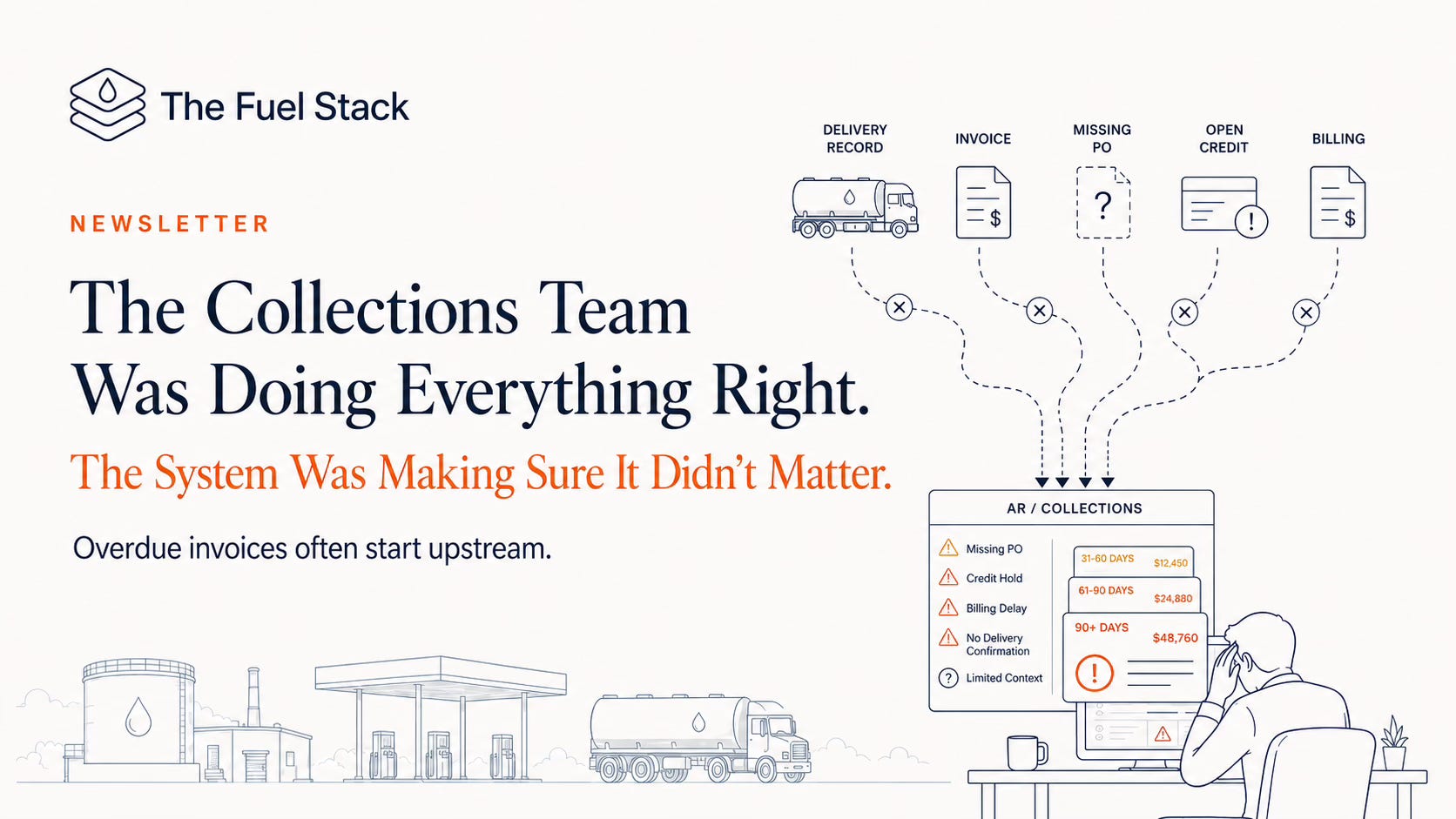
Monica had the aging report open on her second monitor when I walked in.
Color-coded. Yellow for 30 days. Orange for 45. Red for 60. Dark red for 90.
There was a lot of dark red.
I asked her how she decides where to start each morning.
“We focus on the 90-plus day accounts first,” she said. “By the time we get to 30 or 60 days, the day is already gone.”
That stopped me. Most operations I visit begin active collections around 30 days past due. Monica’s team was not getting to accounts until they were three months overdue. Not because they did not care. Because they did not have time.
When I asked what was consuming the rest of it, she pulled up her task list.
Manual aging reports run in QuickBooks. Manual follow-up emails written from self-made templates that escalate in tone over time. Monthly statements manually generated, saved, and emailed to each customer. COD credit card authorizations routed to AR and processed by hand. ACH payments initiated by emailing Treasury with invoice details, waiting for two approvals, and confirming through the next day’s report.
By Monica’s estimate, 70 to 80 percent of her team’s working time went to manual administrative work.
Not collections. Not relationship management. Not the judgment calls that require someone who knows the customer. Administrative tasks that a well-designed workflow could handle automatically.
What upstream actually means
In fuel operations, an overdue invoice may have started failing weeks earlier. During customer setup. At order entry. In delivery documentation. In pricing. In credit processing. By the time it reaches collections it has already traveled through several hands, and the reason it is outstanding is rarely obvious to the person making the call.
Monica walked me through two accounts sitting in the dark red.
One invoice had a pricing error the customer caught before paying. The invoice used the wrong contract differential. The customer placed it on hold pending a credit. The credit request sat in billing for eight days. Monica’s team called at day 45 with no visibility into the open credit. The rep transferred the call, found the right person, and called the customer back two days later. By then the account was nearly 60 days old and the customer had explained the same problem twice.
And the one that made Monica close her eyes before she pulled it up.
A large fleet customer required a PO number on every invoice before their AP team could process it. The requirement had existed since the account was opened, but it was never captured in the customer’s billing profile. The invoice went out without one.
Monica’s team called at day 30. Waiting on a corrected invoice. Day 45. Same answer. Day 60. Escalated to the sales rep. Sales rep called the customer. Customer explained the PO requirement again. Sales rep emailed billing. Billing emailed the account setup team.
The invoice had been chased for months across four people before anyone understood what was actually wrong.
“That account,” Monica said, “has been sitting since January.”
Months of follow-up calls and internal escalations for a piece of information that should have been captured the day the account was created.
The customer was not refusing to pay. The invoice was not ready to be paid.
The context gap
Monica showed me what her team sees when they call a customer.
Invoice number. Amount. Days outstanding. Customer name.
Then she showed me what they cannot see.
Whether there is an open credit tied to the invoice. Whether the customer already contacted billing about a dispute. When the delivery was completed, when billing finalized the invoice, and when the customer actually received it. Whether the customer has a PO requirement that was never captured in their billing profile.
“We are calling customers about problems we do not fully understand yet,” she said. “And the customer has to explain it to us. Every time.”
The problem was not simply that the company used several systems. The problem was that no system carried the context of an invoice from delivery through payment.
Credits lived in a queue Monica’s team could not see. Disputes were tracked in a spreadsheet one person maintained. Customer-specific billing requirements lived nowhere at all.
So a rep calling at day 45 was calling blind. She knew the invoice was outstanding. She did not know it had been on hold for three weeks. She did not know the customer had already emailed billing twice.
That call did not collect anything. It confirmed that Monica’s team was the fourth group of people the customer had talked to about a problem that should have been resolved in week one.
What a connected workflow looks like
Before a collections rep dials a 45-day account she should be able to see:
When was the delivery completed and when was the invoice actually sent?
Is there an open credit, its current owner, and the next required action?
Does this customer require a PO number and has it been validated on this invoice?
Is the invoice currently blocked and who owns the resolution?
The first call can become a resolution call instead of another discovery call. Context replaces confusion. Monica’s team stops being the fourth person and starts being the one who actually resolves it.
Where agentic workflow comes in
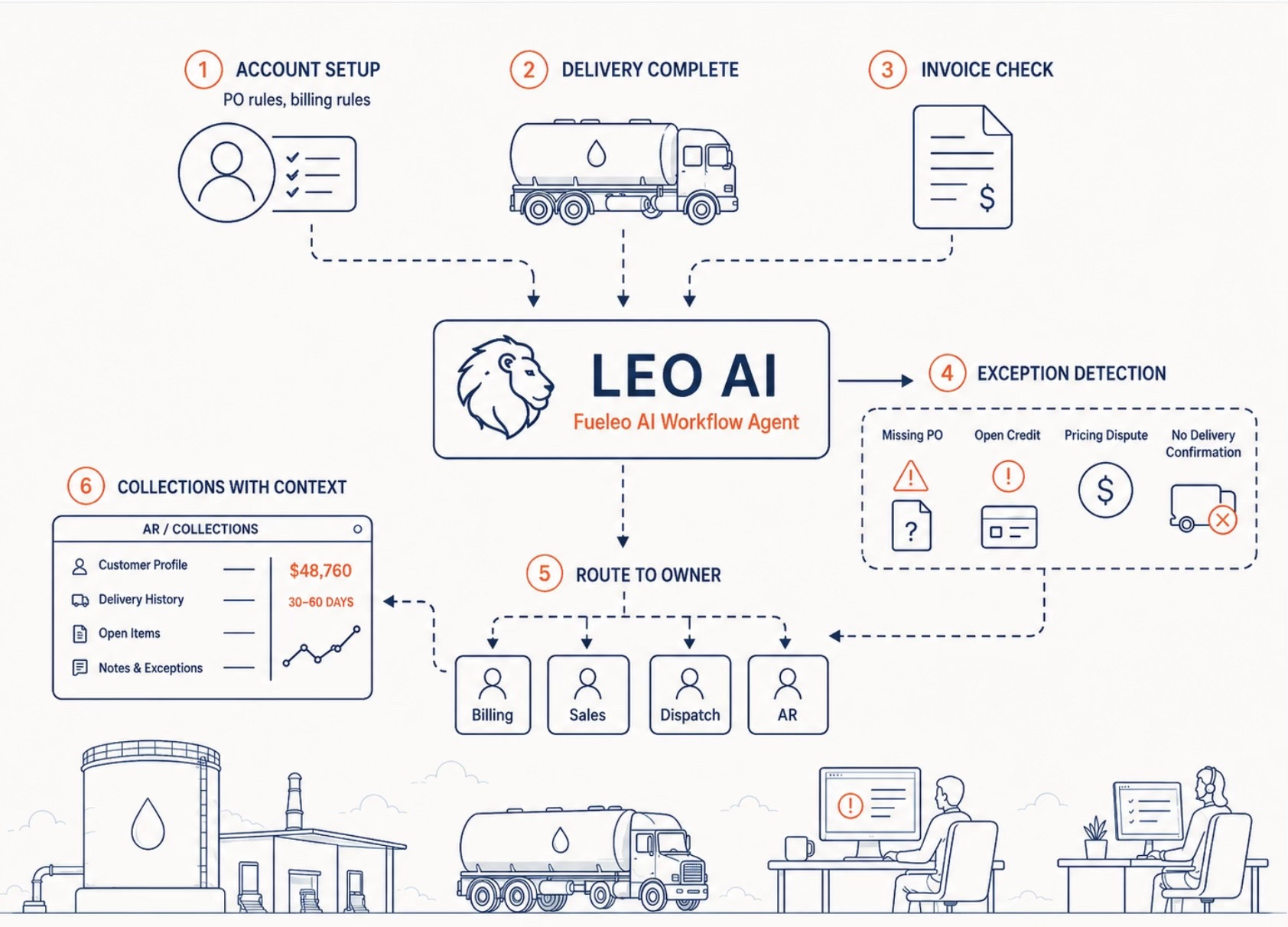
This is where workflow intelligence becomes useful. Not by replacing the collections rep. Not by adding another system to check. But by preventing incomplete invoices from reaching collections in the first place and surfacing unresolved exceptions before the rep picks up the phone.
An agentic workflow operates continuously across the delivery-to-cash chain. It does not wait for a human to run a report or notice a problem. It watches the workflow, checks conditions against account rules, surfaces exceptions to the right people, and routes action to whoever owns the next step.
In the context of Monica’s operation that looks like this.
When a customer account requires a PO, that requirement is captured in the billing profile at account setup. When an order is placed for that customer without a valid PO, the workflow catches it before the invoice goes out. Not after months of follow-up calls. The exception is flagged and routed to the responsible team while there is still time to fix it cleanly.
When an invoice has an open credit or pricing dispute, the workflow surfaces the issue, its current owner, and the next required action alongside the aging record. The collections rep sees it before dialing. The call starts with context instead of confusion.
When monthly statements need to go out, the workflow generates and distributes them automatically. Monica’s team does not spend hours pulling, saving, and emailing.
The agentic workflow does not make the collections call. It makes sure that when Monica’s team picks up the phone they understand why the invoice is outstanding before the customer has to explain it again.
At Fueleo we built this into Leo, Fueleo’s AI workflow assistant, which operates across the procure-to-pay and order-to-cash workflows for fuel marketers. The PO validation. The credit surface. The exception routing. The automated statements. All of it running continuously in the background so the collections team can focus on the work that actually requires human judgment.
Monica’s January account would have been caught in week one. Not months later.
The question worth asking this week
Pull your ten oldest outstanding invoices.
For each one ask three questions:
Why is it still outstanding?
Who owns the next action?
When did the company first know about the blocker?
Then ask whether your collections team can answer those three questions without calling billing, dispatch, sales, or the customer.
If the answer is no, the problem is not collections. The workflow is creating more exceptions than the team can resolve. And no escalation template or collections cadence will fix what is being created upstream.
As I was leaving Monica said something that stayed with me.
“I have a great team. I just wish the rest of the company understood what they were sending us to fix.”
You cannot ask collections to recover cash from invoices the rest of the operation never made collectible.