

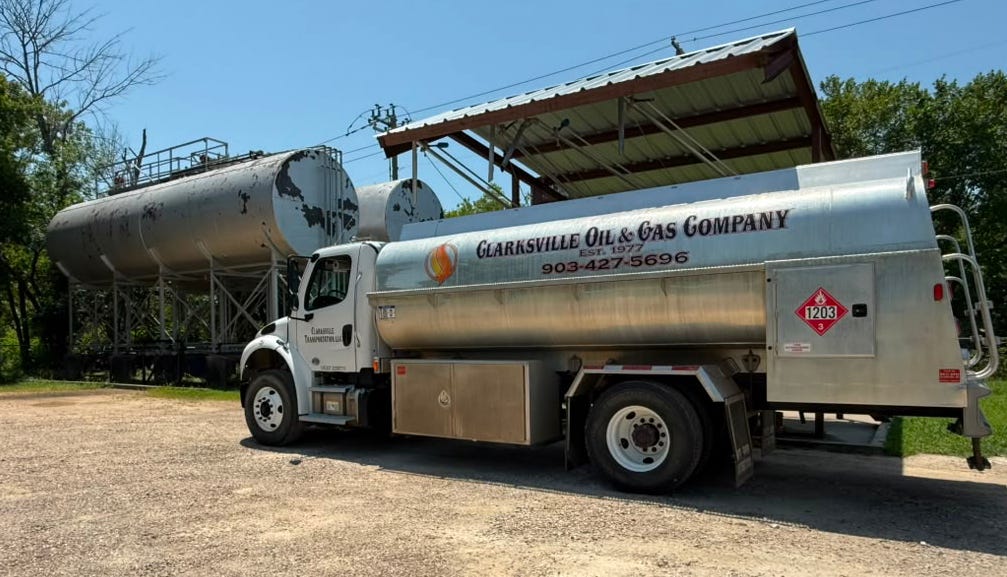
Let me tell you about something I have seen more than once.
A driver loads 4,000 gallons at the terminal in the morning. Runs his deliveries. Comes back to the yard at the end of the day with 240 gallons still in the tank. Pumps it into bulk storage. Goes home.
The physical movement is simple.
4,000 gallons loaded. 3,760 gallons delivered. 240 gallons returned to bulk storage.
Every gallon is physically accounted for.
But the system recorded the terminal load and the customer deliveries. Nobody recorded the return to the bulk tank.
So the system still shows 240 gallons on the truck. The person at the plant counts those same 240 gallons in storage.
The fuel did not go anywhere.
It just exists in two places at once.
That is the inventory problem I keep seeing in fuel distribution. Not theft. Not careless drivers. Not broken meters.
A movement happened. The system never saw it.
Fuel does not move in a straight line
From inside the office, a fuel delivery looks simple.
Lift at the terminal. Drive to the customer. Drop the product. Done.
That is the clean version.
Here is what a real day often looks like.
A transport lifts 8,500 gallons and brings it back to the bulk plant. Three smaller trucks load from the plant. One comes back with 300 gallons left over and pumps it back into storage. Another driver finds the customer’s tank fuller than expected and adjusts the drop. A third driver is not sure his meter read correctly on the third stop.
Every one of those things changed where the fuel was. What it cost. Which ticket it traced back to.
But most inventory systems just see this:
Beginning inventory plus what came in minus what went out equals what is left.
That math is correct. But it misses everything that happened in the middle.
The missing movement becomes a mystery number
When a return or a transfer does not get recorded, it does not show up immediately.
It shows up at month-end as a variance.
More fuel than expected in one place. A shortage somewhere else. Someone labels it shrink or meter error, edits the balance until the numbers agree, and closes out the month.
The report looks clean. Nobody knows what actually happened.
And the problem does not stop at inventory.
If the system thinks the fuel is still on the truck, dispatch might send that driver on another load without enough product. If a return gets counted as a fresh receipt, the same gallons appear twice. If a transfer loses its connection to the original purchase, the cost on the next delivery is wrong.
That flows into customer margins, cost of goods, and sometimes what gets reported for taxes.
By the time someone notices the number is off, the driver who handled that load is trying to remember a shift from three weeks ago.
That is not reconciliation. That is guessing with extra steps.
A balance only tells you one thing
An inventory balance answers one question.
How much fuel should be here right now?
It cannot tell you where the fuel came from. Which truck carried it. Whether the transfer actually made it to the other end. Which BOL supplied the gallons. Whether the difference was measured or estimated. Who touched it and when.
For that you need a movement record.
Every time fuel changes location, something should capture where it started, where it ended up, how many gallons, which product, when it happened, and what paperwork supports it.
The balance should be built from those movements. Not a number someone can edit when the count does not match.
Transfers need two sides
This is where a lot of records fall apart.
A transport unloads 8,000 gallons into the bulk tank. The truck meter says 8,000. The plant meter says 7,980.
The wrong move is to pick one number and overwrite the other.
Both readings matter.
The record should show 8,000 gallons left the truck and 7,980 arrived at the tank. The 20-gallon difference needs a reason. Until that receiving side is confirmed, those gallons should show as in transit. They should not appear in both places at the same time.
Same goes for fuel moving from a bulk tank to a smaller truck. From one compartment to another. From a driver back to the plant at the end of the day.
One movement. Two sides. Both numbers kept.
The driver’s job is to say what happened. Not to sort out the accounting.
Drivers work fast. They have more stops waiting.
What a driver needs to record is simple.
Loaded 2,000 gallons. Delivered 1,760. Brought back 220. Meter seemed off on the third stop.
That is enough.
The driver should not be figuring out which cost applies to the returned product or how a variance hits the books. That is a back office conversation.
This also matters when the driver is working in an area with no signal. The delivery still needs to be recorded at the right time, tied to the right stop. When the app reconnects, it should sync once. Not create duplicate records.
Month-end should not be the first time you ask where the gallons went
Most operations I visit reconcile inventory once a month.
Someone runs a report. The numbers are off. Adjustments get made. The books close.
A better version happens at the end of every shift.
What came in, what went out, what moved between locations, what came back to the yard. Compare that to the physical reading. If the difference is small and within what you would expect, the shift closes. If it is not, you look at the movements while the day is still fresh.
The driver is still reachable. The terminal BOL is still findable. The return that did not get logged is still in someone’s memory.
Catching a small problem at 5pm costs fifteen minutes. Finding the same problem at month-end costs four days and a lot of guessing.
Three questions worth being able to answer
Fuel inventory is never going to be perfectly clean. Meters differ. Drivers work offline. BOLs arrive late. Product moves between trucks and tanks in ways the office does not see in real time.
That is just the nature of the business.
But if you run a fuel operation, you should be able to answer three questions about any load on any given day.
Where is the fuel right now?
What moved it there?
Can you trace it back to where it started?
If the only way to answer those questions is to edit a number until it looks right, you do not have inventory reconciliation.
You have a new number and the same question you started with.